Dear readers,
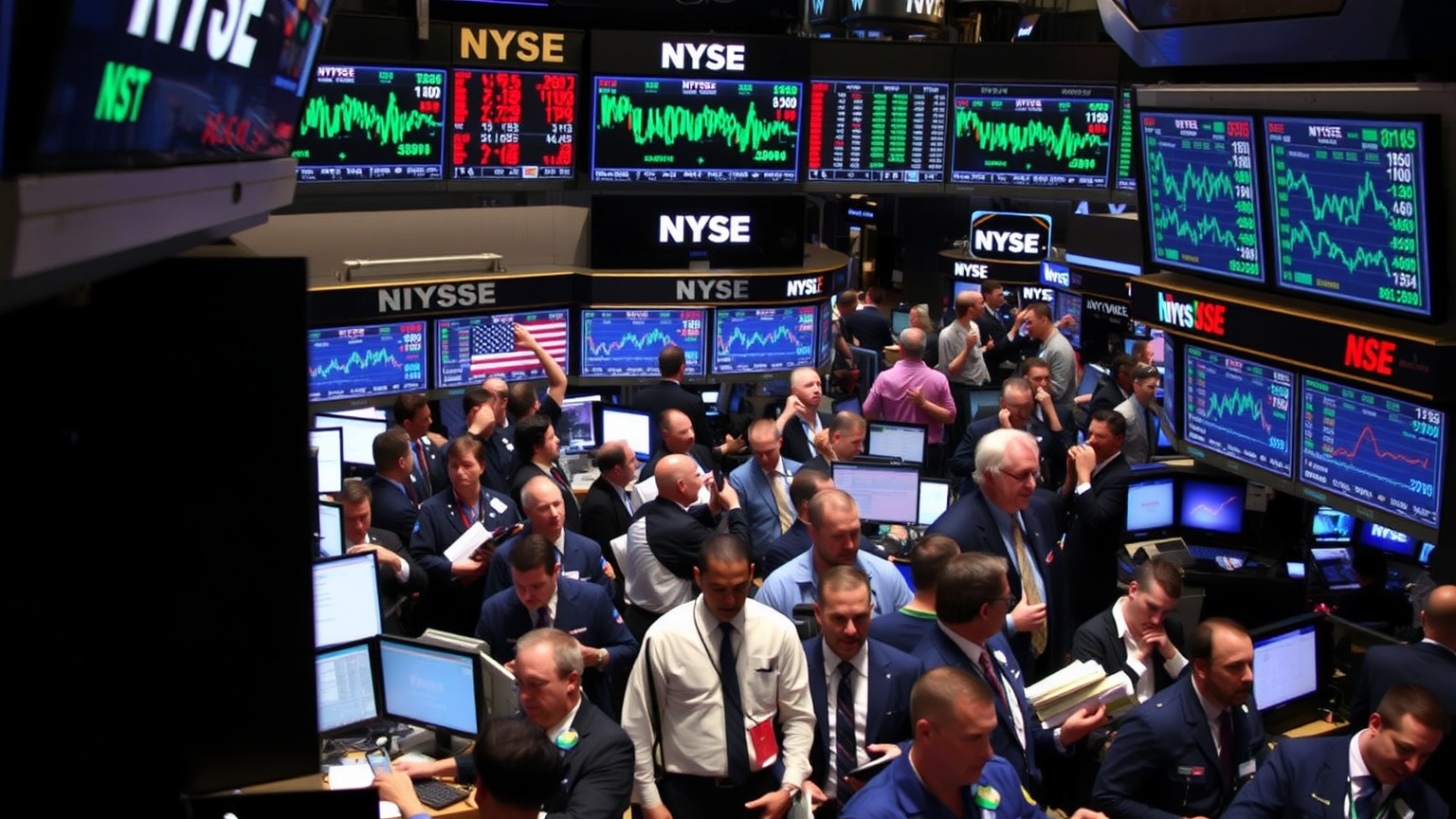
Wall Street shutters early today for Independence Day, but Thursday’s session already wrote the headline that will carry into next week: America’s labor market is cooling, and investors have decided that’s exactly the news they wanted. The June jobs report missed badly, the Dow Jones celebrated with a fresh record, and a rotation already underway — away from artificial intelligence infrastructure and toward things you can actually hold in your hand — kept accelerating. Meanwhile, against a backdrop of record gas prices and pricier burgers, the American consumer keeps spending like the party never ended.
A Cooler Labor Market, a Hotter Dow
Thursday’s Employment Situation report for June landed well short of expectations: employers added just 57,000 jobs, against a consensus estimate of roughly 110,000. The Bureau of Labor Statistics also revised April and May downward by a combined 74,000 jobs, deepening the sense that hiring has stalled. The unemployment rate nonetheless ticked down from 4.3% to 4.2% — not because more Americans found work, but because more than 700,000 left the labor force altogether, shrinking the denominator rather than growing the numerator.
For a market conditioned to treat weak data as a rate-cut signal, this was close to perfect. Fed funds futures now assign better than 90% odds that the central bank holds rates steady at its July meeting, and the anxiety about a hawkish surprise later this year has largely evaporated. The reaction was a clean sector rotation: the Dow Jones Industrial Average climbed 1.1% to a fresh all-time high of 52,900, while the Nasdaq, still weighed down by expensive AI names, lagged behind.
The Consumer Who Won’t Blink
What makes this cycle unusual is that the softening jobs picture hasn’t dented spending — even with inflation running above 4%. Industry estimates put a record 72.2 million Americans on the road for the holiday, undeterred by gasoline averaging $3.50 a gallon, the third-highest level on record, a price shaped by tensions in Iran and lingering logistics bottlenecks. The backyard cookout isn’t cheap either: the cost of a barbecue for ten reached a record $75.50, up 7.5% from a year ago, driven largely by a 23% jump in beef prices tied to tariffs and drought.
The picture for investors isn’t one of collapsing demand — it’s demand finding a different shape. Shoppers are leaning harder on private-label products and bulk purchases to manage the bill, which is exactly the environment where companies with genuine pricing power in retail and travel keep their edge. Spending hasn’t cracked; it’s just gotten more selective, and so should stock picking in the sector.
Should investors sell immediately? Or is it worth buying DAX?
Apple Carries the Market, Chips Take the Hit
Nowhere was the shift toward tangible consumer products clearer than in Apple’s session on Thursday. The stock jumped nearly 5%, adding about $182 billion in market value — not on some abstract AI promise, but on hardware: reports that Apple is planning a wide rollout of foldable iPhones for fall 2026 and has lifted its production target from 7-8 million units to 10 million. That single move was enough to keep the broader S&P 500 out of the red on its own.
The mirror image played out in semiconductors, the sector that had dominated the first half of the year. The Philadelphia Semiconductor Index dropped more than 5%, and Micron Technology fell nearly 6%, compounded by reports that Michael Burry has built a sizable short position against the memory-chip maker above the $1,050 level. The message underneath the numbers: capital is rotating out of expensive infrastructure bets and back into proven consumer-technology cycles.
The DAX Hits Its Own Record, but Germany’s Cracks Show
Rate-cut optimism crossed the Atlantic too, pushing the DAX to a fresh record of 25,706 on Friday afternoon. Bank of America added its own tailwind, lifting its year-end target for the Stoxx 600 to 630 on hopes of a eurozone recovery. But beneath the index-level cheer, individual German names tell a more complicated story than the American consumer narrative suggests. Rheinmetall warned of revenue shortfalls of up to €300 million this year after Germany canceled the F126 frigate program, even as its quarterly growth remains strong. At Mercedes-Benz, tens of thousands of employees took to the streets to protest an intensifying cost-cutting drive. The DAX’s record run currently owes more to the global rate environment than to operational strength at home.
The Takeaway
With U.S. markets dark today, the real test resumes next week, when the ISM services PMI and the Fed’s meeting minutes land and force a verdict on whether this labor-market cooling is the gentle kind central banks dream about — or the early sign that even America’s famously stubborn consumer has a breaking point. For now, the trade is clear: fade expensive infrastructure bets, favor companies that can pass costs through to customers who keep paying them, and watch whether Germany’s index-level records can survive contact with its factory floors.
Have a great Independence Day weekend.
Best regards,
The StocksToday.com Editorial
Ad
DAX Stock: Buy or Sell?! New DAX Analysis from August 18 delivers the answer:
The latest DAX figures speak for themselves: Urgent action needed for DAX investors. Is it worth buying or should you sell? Find out what to do now in the current free analysis from August 18.
DAX: Buy or sell? Read more here...